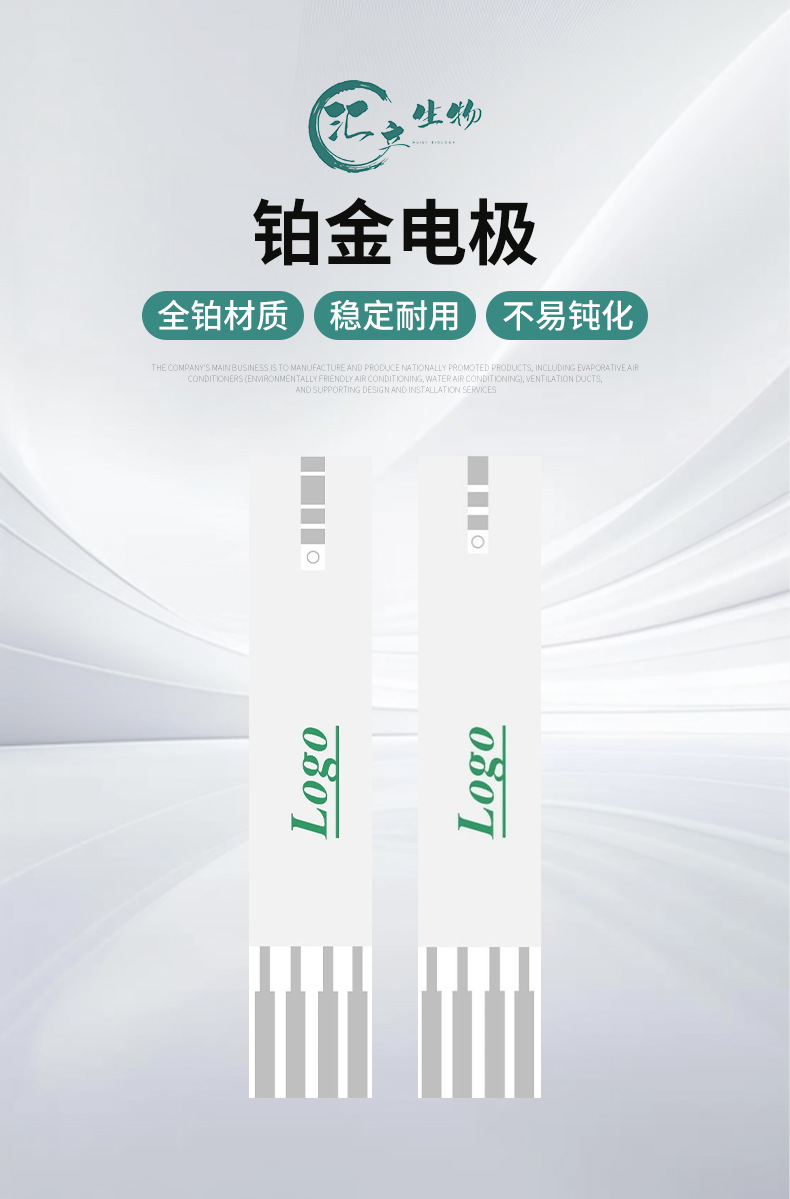
Sputtered Platinum Electrode Sensors
Platinum delivers outstanding catalytic activity and oxidation resistance, with high sensitivity to oxygen and hydrogen peroxide reactions. Ideal for blood gas analysis, uric acid testing, lactate testing, and other applications that demand highly catalytic electrodes.
Technical Specifications
| Parameter | Specification |
|---|---|
| Electrode Material | High-purity platinum (Pt ≥ 99.95%) |
| Deposition Method | Magnetron Sputtering |
| Film Thickness Range | 50-300 nm (customizable) |
| Substrate Options | PET / PI / Ceramic (optional) |
| Electrode Dimensions | Customized per customer drawings |
| Catalytic Activity | Excellent catalysis of oxygen reduction and hydrogen peroxide decomposition |
| Oxidation Resistance | Maintains stable catalytic activity at high temperatures |
| Environmental Compliance | RoHS and REACH compliant |
Key Advantages
1. Outstanding Catalytic Activity
Platinum is one of the best-known electrocatalytic materials, with extremely low overpotentials for the oxygen reduction reaction (ORR) and hydrogen peroxide decomposition, enabling fast and sensitive signal response.
2. Excellent Oxidation Resistance
Platinum maintains stable catalytic performance under high-temperature and oxidizing conditions, making it suitable for detection systems that require high-temperature sterilization or long-term continuous operation.
3. Low Overpotential
Platinum electrodes exhibit extremely low overpotentials within the working potential range, enabling the sensitive detection of trace analytes — particularly well suited for the precise measurement of partial pressure of oxygen (pO2) in blood gas analysis.
Applications
- Blood Gas Analysis: as the catalytic layer of pO2 electrodes in POCT blood gas analyzers and large-scale blood gas analysis systems
- Uric Acid Testing: uricase-modified platinum electrodes for the electrochemical measurement of uric acid concentration
- Lactate Testing: lactate-oxidase-modified platinum electrodes for sports medicine monitoring and intensive-care blood gas analysis
- Hydrogen Peroxide Detection: leveraging platinum's catalytic decomposition properties to detect hydrogen peroxide generated by enzymatic reactions
Comparison with Conventional Platinum Electrodes
| Comparison Item | Magnetron-Sputtered Platinum Electrode | Conventional Electroplated Platinum Electrode |
|---|---|---|
| Catalytic Activity | High, large specific surface area | Moderate |
| Film Purity | Pt ≥ 99.95% | Higher impurity content |
| Adhesion | Strong, bonding force >3N | Moderate |
| Environmental Impact | Vacuum process, pollution-free | Heavy-metal-containing waste liquid |
| Batch Consistency | CV ≤ 5% | CV 10-15% |